FAQs
We’ve taken the time to compile some answers to questions we are commonly asked about orthodontic treatment. If you don’t see the answer here, check our blog posts, downloads, or contact us here.
What’s the difference between a regular dentist and an orthodontist?
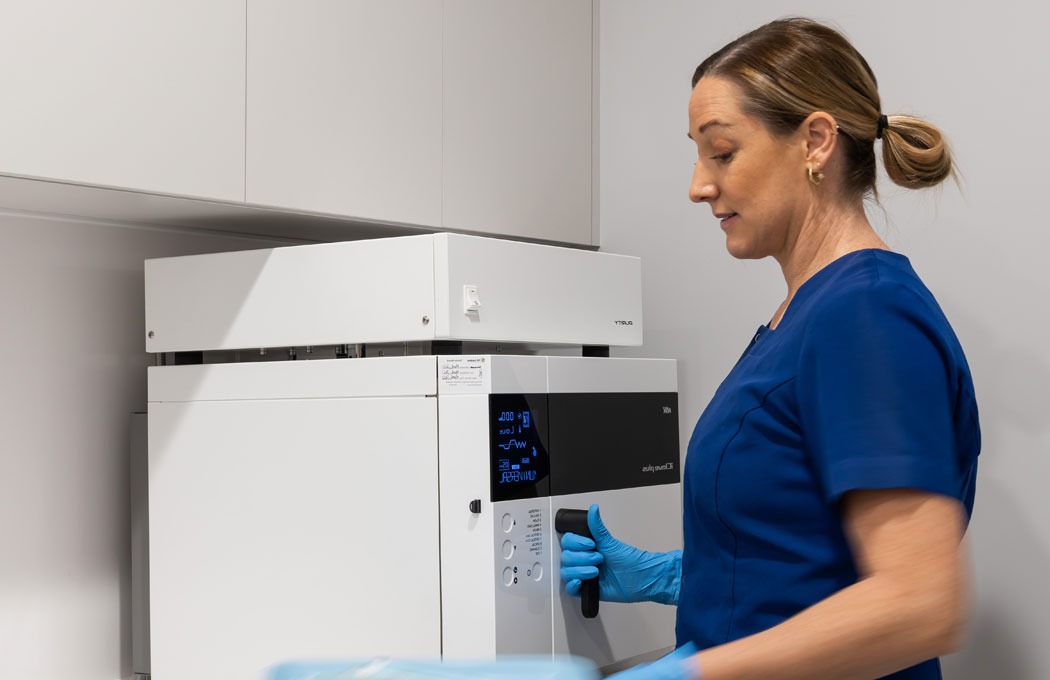
A dentist takes care of your overall oral health - cleanings, fillings, and general care. An orthodontist is a specialist who qualified as a dentist and then completed three extra years of full-time training focused on tooth and jaw alignment.
If you’re looking to straighten teeth or correct a bite, seeing a qualified orthodontist ensures you’re getting expert care from someone who specialises in this area.
Regular oral health check-ups with your general dentist are important during orthodontic treatment. If you do not have a regular dentist, we can recommend one for you.
Are braces or orthodontic treatment necessary for you or your child?
We will happily tell you if orthodontic treatment is not necessary for you or would mainly be of aesthetic benefit.
Orthodontic treatment is useful to correct many bite issues including crooked teeth, gaps, bite problems (like overbite, underbite, or crossbite), or if teeth don’t meet properly when the mouth is closed.
In addition to cosmetic benefits and improved confidence, orthodontics can improve oral health, jaw function, and long-term dental stability. Left untreated, most orthodontic problems become worse.
Signs your child might need braces include crowded or crooked teeth, difficulty chewing, breathing through the mouth, early or late loss of baby teeth, or thumb-sucking past age 5. A consultation with an orthodontist is the best way to know for sure.
At what age should my child have their first visit for an orthodontic screening?
The Australian Society of Orthodontists recommends a first visit with a Specialist Orthodontist at 7-9 years of age, when the first adult teeth begin to emerge. Professional evaluation and early monitoring, often before baby teeth are lost, allow us to identify any developing issues, guide jaw growth, correct harmful habits, and plan for any required treatment at the optimal time.
See more For Kids
At what age should my child get braces or start orthodontic treatment?
Full treatment with braces or aligners, such as Invisalign® treatment may not start until the teenage years. Earlier, a specialist orthodontic assessment at 7-9 years of age can identify if intervention, such as plates or expansion appliances are needed. This allows the orthodontist to favourably influence growth to avoid more complex problems later.
Much of the development of the face occurs during the growth spurt at puberty. Once the facial bones have finished growing, skeletal corrections which would have been simpler to undertake at an earlier age may instead require surgery.
Can adults have orthodontic treatment like braces or aligners?
Yes, we welcome adult patients - healthy teeth can be moved at any age. Studies show that the first thing a person notices about you is your smile, and a beautiful smile can improve self-esteem and confidence.
Our adult assessment consultation will provide you with more information about what to expect, determine if your overall dental health is suitable, and advise whether orthodontic treatment is right for you.
Modern treatment options for braces and clear aligners like Invisalign® treatment are discreet, comfortable, and highly effective at improving both your smile and long-term dental health.
See more For Adults
Do I need a dentist’s referral to see an orthodontist?
No, a referral is not required. To make an appointment, just phone us on 08 9300 9975. However, also check with your health fund as some provide additional rebates if you have a dental referral.
How do I choose the right orthodontist?
Look for a specialist registered with the Australian Health Practitioner Regulation Agency (AHPRA), and ask friends and family for recommendations. An experienced orthodontist will offer a thorough consultation, explain your options clearly, and make you feel confident in their care.
What is early intervention orthodontic treatment, and does my child need it?
Early orthodontic treatment (Phase One or interceptive treatment) helps guide the growth of a child’s jaw and incoming teeth. It’s usually recommended for children between ages 7 and 11 if issues like crowding, crossbites, or thumb-sucking habits are detected.
Addressing significant problems early avoids more severe issues later, and means later treatment may be quicker and more effective. This stage may involve treatment with expanders, space maintainers, or plates to guide jaw growth and tooth alignment.
What causes crooked teeth or bite problems?
Orthodontic problems can be caused by a mix of genetics and habits. You may inherit crowding, spacing, or jaw alignment issues from family members. Other factors—like thumb-sucking, early loss of baby teeth, or trauma—can also affect how teeth grow in. During your consultation, we’ll assess what’s contributing to your or your child’s smile issues and recommend the best approach to treat them.
Will my child need to have teeth removed?
Unlike some orthodontists who see the removal of teeth as a common component of orthodontic treatment, we avoid removing teeth unless absolutely necessary. Assisted by our SureSmile 3D planning software, we run simulations to determine if treatment can be completed without extractions.
In some cases, removing one or two teeth may help create space and achieve the best result. We only recommend extractions when necessary and will always explain why it’s needed and what alternatives might be possible.
What’s the difference between braces and clear aligners like Invisalign®?
Braces use fixed brackets and wires to move teeth, while Invisalign® treatment uses a series of clear, removable aligners. Braces are ideal for complex cases, while aligners offer a discreet and flexible option for mild to moderate issues. Your orthodontist will help you choose the best option for your needs.
What types of braces are available?
There are several types of braces, with varying benefits in terms of visibility, comfort, and treatment time:
- Traditional metal braces
- Clear ceramic braces
- Lingual braces (hidden behind the teeth)
- Clear aligners (like Invisalign®)
How do clear aligners work?
Clear aligners gradually shift your teeth using a custom-made series of trays worn over your teeth. You’ll wear each set of aligners for about one week before moving to the next. Aligners should be worn 20–22 hours per day and removed only for eating and brushing.
Are aligners suitable for all cases?
Aligners can provide excellent results and, in fact, may be more suitable than braces for achieving certain movements. Sometimes your orthodontist may recommend braces rather than aligners. In this case, if you insist on aligners, the final result may not be as precise.
Aligners may be less efficient in cases of:
- Skeletal malocclusion which requires the intervention of traditional braces and possible surgical intervention
- Extreme crowding of teeth and severe bite issues
- Very small teeth or severely worn teeth
- Severe rotations of teeth or impacted teeth
- A lot of dental crowns and bridgework
Can I still get orthodontic treatment if I have missing teeth, crowns, or implants?
Yes, our orthodontists regularly treat patients with missing teeth, crowns, or dental implants. Your treatment plan will be customised to work with your existing dental work or to help prepare your mouth for future dental restorative work.
I only have a few crooked teeth, is there a fast treatment option?
Yes, for some patients with minor crowding or small gaps, we can offer fast, targeted treatment options—sometimes in as little as 6–9 months. At your consultation, we’ll assess if a limited treatment plan is suitable or if more comprehensive care is needed for long-term results.
What is a plate or orthodontic appliance?
We’ll only recommend appliances that are right for your individual treatment plan and explain exactly how they’ll work for your smile.
Some orthodontic correction in children can be undertaken using an orthodontic appliance, commonly called a plate. These are mostly used in the upper dental arch and may be used to alter the relationship between the upper and lower jaws.
Some plates are removable. Fixed expansion appliances are used when the upper jaw is too narrow. These appliances are attached to the upper first molar teeth and activated gradually to achieve the correct width of the upper dental arch.
Does having braces or aligners hurt?
It’s normal to experience some tenderness or pressure after getting braces fitted or adjusted, or after starting a new set of aligners. If you do experience pain, don't stress, it just means your teeth are moving! Discomfort should disappear in a few days.
- For minor irritation of cheeks and gums, use orthodontic wax to cover sharp edges.
- Eat soft foods for a few days until your teeth become more comfortable.
- If necessary, use the same pain reliever as you would for a headache.
- If you have custom-made Suresmile wires, try sipping or swirling cold water around your mouth to relax the wires and provide relief.
Overbite
An overbite, overjet, or deepbite occurs when the top teeth sit too far in front of the bottom teeth. This type of malocclusion is skeletal in nature, so early diagnosis is very beneficial. During the child’s growth phase, there is an opportunity to gain the best treatment advantage.
The majority of people have some degree of an overbite but when the space between the upper and lower teeth is significant, problems can occur:
- Excessive wear
- Jaw discomfort
- Upper front teeth more susceptible to injury

Underbite
An underbite is when the lower teeth sit in front of the upper teeth.
Underbites are often the result of the top and bottom jaw growing at different rates. An underbite makes it hard to chew and speak properly and can also lead to uneven wear of the teeth.
Since this type of malocclusion is skeletal in nature, it’s very beneficial if it’s diagnosed early.
Open bite
An open bite is when your top teeth and bottom teeth don’t come together when you close your mouth.
Being unable to bring your teeth together can affect your ability to bite and chew.
Open bites are typically caused by genetics or oral habits including:
- Tongue thrusting
- Prolonged pacifier use
- Thumb sucking

Crossbite
A crossbite occurs when some of the upper teeth sit inside some of the lower teeth when the jaws are closed together.
Crossbites can cause significant tooth, gum and jaw complications:
- a crossbite with one or more front teeth can lead to loosening of the opposing tooth or teeth, gum recession and tooth wear
- posterior crossbite can lead to uneven jaw growth, facial asymmetry and tooth wear. Patients may compensate by shifting their jaw to one side, which can cause permanent changes in the facial structure if not corrected.
Causes include:
- Trauma
- Certain oral habits including thumb sucking
- Genetics
- Early or delayed loss of baby teeth
- Abnormal eruption of permanent teeth
Crossbites can be easier to treat when addressed early, ideally from around 7-9 years of age.
Crooked teeth
Crooked teeth or malalignment can occur as a result of genetics, thumb sucking, poor oral health, accidents, or dental disease.
Cases can vary from mild to severe.
Crooked teeth:
- are harder to clean, increasing the risk of plaque build-up, tooth decay, cavities and gum disease
- can interfere with proper chewing
- may cause jaw pain and headaches
- strain the teeth, jaws, and muscles, increasing the risk of breaking a tooth.
- can make people feel self-conscious about their appearance and affect their self-esteem
Crowding
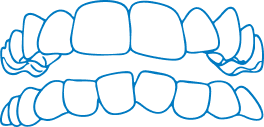
Crowding occurs when there isn’t enough room in the jaw to fit all the teeth.
Limited space causes teeth to overlap, shift out of line or twist.
Crowding can be caused by:
- losing primary teeth too early
- permanent teeth erupting incorrectly
- an imbalance in the tooth-to-jaw size ratio
Crowded teeth are harder to brush and floss properly, which increases the risk of tooth decay and gum disease.
Spacing
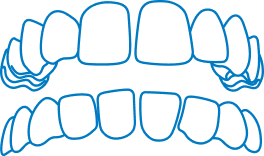
Spacing is when you have gaps between two or more teeth.
Spacing can be caused by:
- teeth that are too narrow for the jaw
- certain oral habits, such as prolonged thumb sucking
- missing teeth
Having spaces is not just a cosmetic concern, it can also have a negative impact on the health of your gums.
How often do I need to attend appointments?
Appointments are scheduled according to each patient’s needs. The frequency and length of your appointments will vary depending on your stage of treatment.
Our use of remote Dental Monitoring allows us to reduce the number of appointments and only schedule an in-person visit when necessary.
What appointment times are available?
Our practice is open Monday to Friday, 8.10am to 5pm.
Many of our patients are in school, so before and after school appointments are naturally in demand. We schedule these popular times with shorter, frequently occurring appointments to maximise the number of patients we can accommodate.
Longer, one-off appointments for consultations, repairs, and fitting and removing braces or appliances will need to be made from mid-morning to mid-afternoon. Arriving 5-10 minutes early for these appointments allows time to use the brushing station, complete any paperwork and address any queries.
Can I come in with my child during their appointment?
A parent or guardian needs to attend the initial consultation and any future consultation appointments. At treatment visits, parents are welcome to make themselves comfortable in our reception lounge. You will have the opportunity to ask any questions at the end of each appointment.
If your child requires additional support, we request that only one parent accompany them in clinical settings.
I live outside Perth or travel for work. Can I still have treatment?
We can treat patients who live in rural locations or who travel regularly. Dental Monitoring gives us the ability to closely monitor the treatment process and the timing of appointments. Speak to us to see whether we can accommodate your circumstances.
What happens if I miss an appointment?
We understand that life can get busy, but it's important to keep your scheduled appointments. When you book with us, we reserve that time just for you and send reminders to help you stay on track.
Missing an appointment not only delays your treatment progress but also affects other patients who could have used that time for their care. Getting a new appointment that fits with your schedule could also become harder to accommodate.
To avoid any inconvenience, we kindly ask that you provide at least 48 hours’ notice if you need to cancel or reschedule. If you cancel too late or don’t attend your appointment, a fee may apply.
Is there parking near the practice?
Yes, there are car parks and street parking nearby - check the signs for details. All City of Joondalup street parking has parking meters and use the Easypark app. Our Cottesloe practice has free parking in the “Profile Orthodontics” marked bays in Clapham Lane, and free 1-2 hour parking in adjacent carparks.
What are retainers and how long will I need to wear them?
Retainers are custom-made clear plastic appliances that hold your teeth in their new position once treatment is complete. Without them, teeth can gradually shift back.
At our practice, we provide detailed instructions tailored to your case—usually, this means full-time wear at first, followed by night-time wear long-term to avoid unwanted tooth movement. Wearing your retainer is key to protecting your investment and maintaining your smile for life.
What happens if I stop wearing my retainer?
Teeth can shift back if you don’t wear your retainer as directed. This is called relapse, and in some cases it may require more treatment to fix. Consistent retainer wear protects the investment you’ve made in your smile.
Still have a question?
Get in touch with our team to get a quick answer. We want to make sure you are happy and confident every step of the way through treatment.
Contact us
Visit us
Our specialist orthodontic practices are located in two convenient locations.
Profile Orthodontics Joondalup
3 Shenton Avenue (cnr Lakeside Drive),
Joondalup WA 6027
info@profileorthodontics.com.au
Opening Hours
- Monday - Friday
- 8.15am - 5.00pm
Profile Orthodontics Cottesloe
30 Jarrad Street (cnr Railway Street),
Cottesloe WA 6011
info@profileorthodontics.com.au
Opening Hours
- Tuesday - Friday:
- 8.15am - 5.00pm